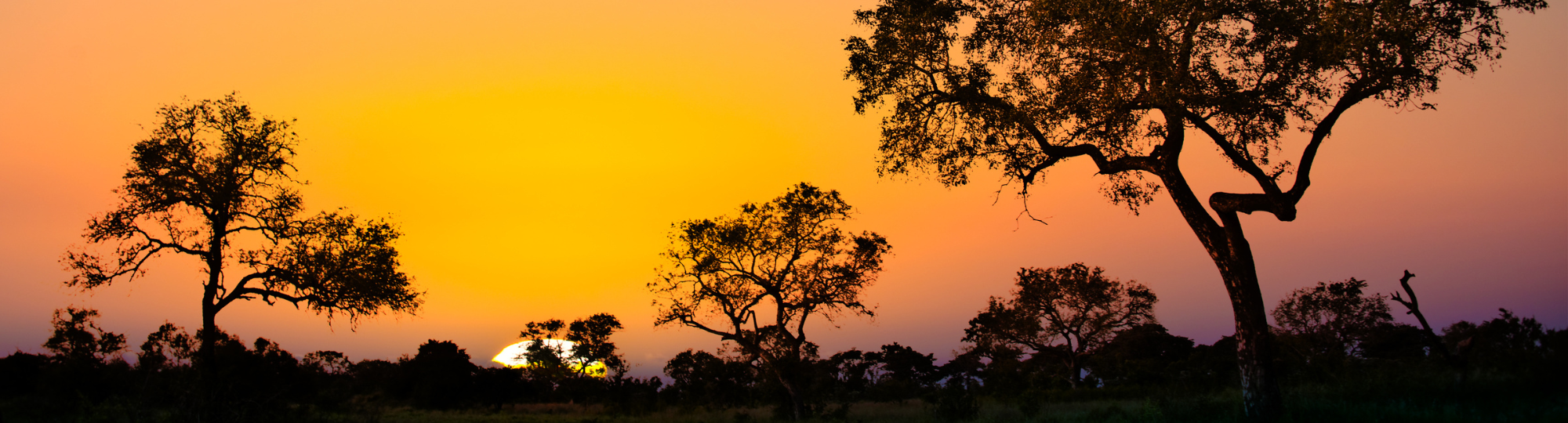
Did you know that the Brazilian Cerrado is the second largest biome in the country, occupying around 25% of the national territory? Spread mainly across the central-west, southeast and northeast regions, it extends across the states of Goiás, Mato Grosso, Mato Grosso do Sul, Minas Gerais, Bahia, Piauí and Tocantins. Despite its vast extension and importance, the Cerrado is still little understood by many, especially when we talk about its ecological and agricultural wealth.
What characteristics make the cerrado important?
The Cerrado has unique vegetation, always composed of a mixture of trees with twisted trunks, grasses and shrubs. Although it is often compared to a savanna, its characteristics go beyond that, with surprising biodiversity. The biome is home to more than 12 thousand species of plants, of which almost half are endemic, that is, they only exist in this region.
Its acidic soil composition and often poor in nutrients stand out, requiring special attention for proper correction and fertilization. And it is precisely in this regard that agriculture in the Cerrado stands out, although it is difficult to imagine that this is possible. Correct soil management, with techniques such as the application of limestone and gypsum, is essential to transform these apparently unproductive soils into fertile fields for the development of various crops.
The most common agricultural crops in the cerrado
The biome is undoubtedly one of the main pillars of Brazilian agriculture. With the introduction of advanced soil management technologies and crop adaptation, the region has become one of the largest grain producers in the world. Soybeans, corn, cotton and beans are some of the predominant crops, but there is also the presence of coffee, sugar cane, rice and various fruits, such as watermelon, mango and pineapple.
This process of adapting agriculture to the Cerrado began in the 70s, when the emergence of Embrapa (Brazilian Agricultural Research Corporation) and the development of specific techniques allowed for efficient use of the soil. Today, the Cerrado is responsible for more than 50% of Brazil's grain production, consolidating itself as the heart of national agribusiness.
The ecological importance of the cerrado
In addition to its great relevance for agribusiness, the Cerrado also plays a very important role in ecological balance. It is responsible for the source of three of the largest river basins in South America: the São Francisco River, the Paraná River and the Tocantins-Araguaia River. For this reason, it is widely known as the “cradle of waters”.
The Cerrado is also an important climate regulator, contributing to the maintenance of rainfall patterns that supply other regions of Brazil. Its conservation as a biome is very important not only for agriculture, but for the environmental balance of the entire country.
Some interesting facts about the cerrado:
- Despite being the second largest biome in Brazil, the Cerrado is one of the most threatened, with around 50% of its original area already devastated.
- It is home to more than 850 species of birds, 250 species of mammals and 1.200 types of fish.
- The Cerrado is considered one of the 34 global biodiversity hotspots, which means it is one of the areas richest in biological diversity and, at the same time, one of the most threatened on the planet.
Although the Cerrado is one of the country's largest economic drivers, its intensive use for agriculture has increasingly required initiatives that seek to reconcile agricultural production with sustainable practices, all in search of a guarantee that the biome continues to be the powerhouse that it is without losing its ecological characteristics. Sustainable soil management programs, such as the application of appropriate and quality agricultural inputs, can help extend the useful life of arable land, maintaining productivity and preserving local biodiversity.
On this National Cerrado Day, we invite you to learn more about the importance of this biome for both the economy and the environment of Brazil. Its preservation and sustainable management are essential to ensure that Brazil continues to have a source of agricultural wealth and a natural reservoir of biodiversity and water resources. The balance between production and preservation is the path to a prosperous and sustainable future.
More about soil preparation and crop protection
 Optmix, combination of agricultural limestone and gypsum in a single application, more optimization in soil care
 Itaú Limestone awarded 5 consecutive times
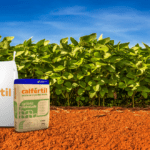 Study carried out with CalFértil proves increased productivity in soybean and corn crops
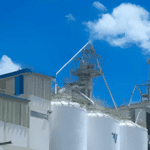 Expansion of the Itapeva factory: Viter invests in greater production capacity to meet growing agribusiness demand